‘Community Routes’, Broad St and Ladywood

Our second walk for ‘Community Routes’, Roundhouse was to Broad St and Ladywood, to hear more stories about the area and research what should be included in the route. This self-guided audio walk will be available from Roundhouse, Birmingham in the spring next year, hosted on the Geotourist app. We were lucky to be joined by historian, Norman Bartlam, Mike Olley, manager of Westside Bid and Dawn Carr from Black Heritage Walks Network.
Fascinating to be taken back in time and imagine the area as it once was. In the late 18th century and early 19th century, the industrial city of Birmingham was expanding rapidly, growing from a small town to a thriving place full of businesses and industry; The city of a thousand trades. We learned about Kunzle’s chocolate factory, Ostlers Glass Factory’s contribution to the Great Exhibition, an incredible crystal fountain commissioned by King George on his royal visit to Birmingham, the original orthopaedic hospital, now a hospitality venue. We heard an interesting story about St Peters Church, demolished to make way for the ICC; far more bodies were exhumed than those recorded, potentially a result of the plague. We learned about the Unitarian Church of the Messiah, now also sadly gone and we heard about a mysterious body discovered buried under the ground in front of the steps of the original Presbyterian chapel, which has several incarnations, even a nightclub and is still in existence today. There’s Bingley Hall, Birmingham’s first exhibition centre, 140 years before the one we know now, It was built in 1850, the hall too had many incarnations too over it’s history, hosting cattle markets, exhibitions, circus’s, it was often used for political events and it’s thought that Gladstone made a speech there in 1888, the first to be recorded on Edison’s newly invented phonograph, brought over from the United States! Sadly it’s no longer there either. There was an interesting story about Lee Longland’s, a high end furniture manufacturer; Norman told us the only reason there wasn’t a tramline up Broad St in 1800’s was that they didn’t want the ‘riff-raff ‘coming up their end, maybe some karma in this as they’ve gone into administration this year, just as they’re laying a tramline up through Broad St for the first time! There’s the statue of Joseph Sturge at Fiveways, an industrialist and philanthropist, who was central in the anti slavery movement and fought for the rights of the working man. As part of the Temperance Movement, it’s said that he would have limes brought over from his plantation in the West Indies and be seen handing them out to people leaving the pubs in the early hours!
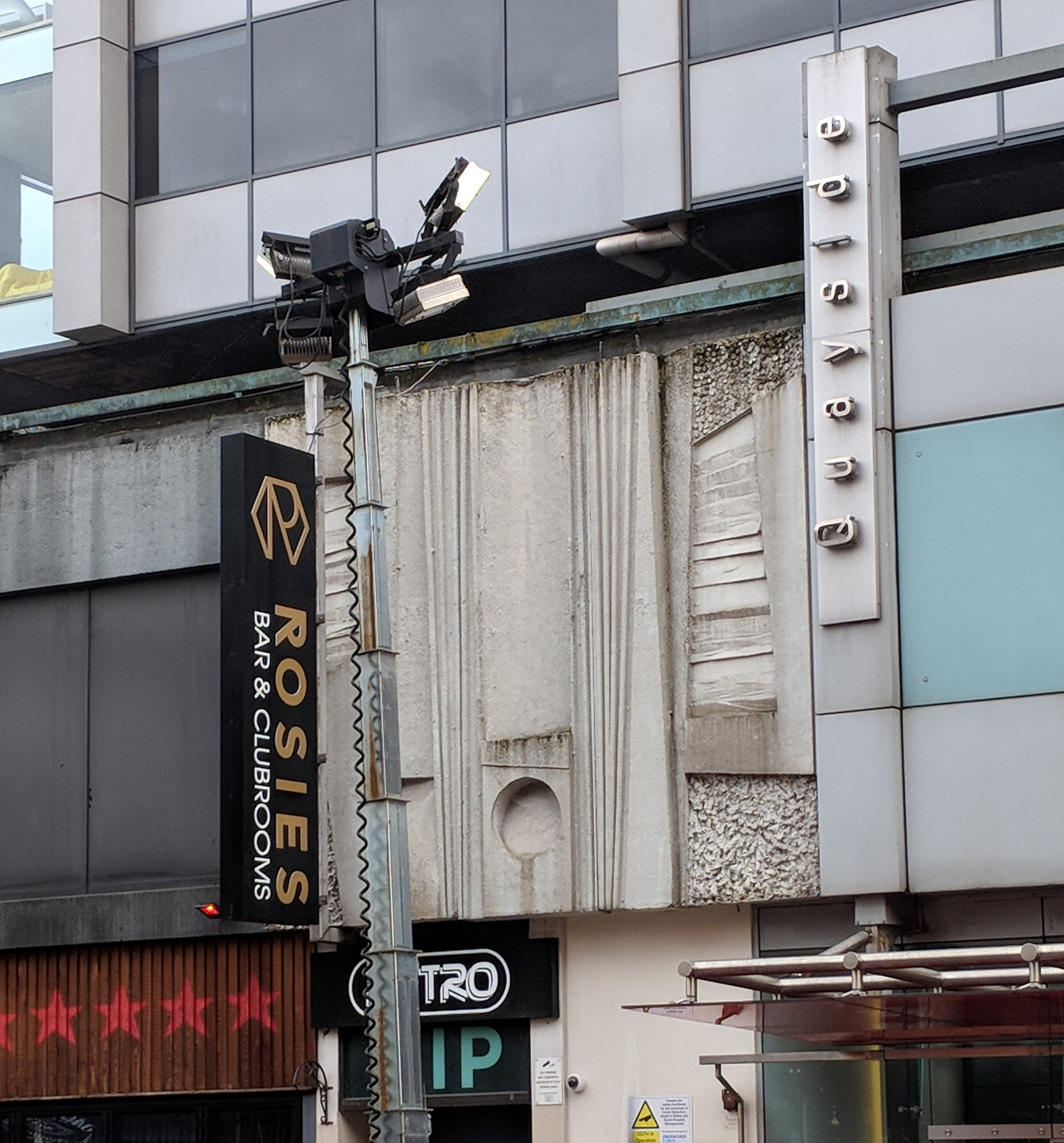
I’d never noticed the Brutalist artworks by William George Mitchell above the shops and venues before – always worth looking up, down and around as we go about our way ! It’s been amazing to see the city differently, I love exploring the heritage of places with people who have a passion for these histories, so much collective knowledge and material to inspire the artwork !
There’s too much to share here and I’ve had to leave a lot out but you can find out much more about this unique history in Norman’s books, Broad St, Ladywood, Ladywood Revisited and I really recommend visiting Old Ladywood website, beautifully created by Mac Joseph, so many old images of Birmingham to feast your eyes on !
To follow more about contemporary life around Broad St, a central Birmingham hotspot, with thriving hospitality and retail outlets based around Birmingham’s stunning inner city canal system, you can follow Mike’s blog ‘Olley’s Oracle’ or take a walk with Dawn on one of their Black Heritage Network Walks